
Product
How it Works
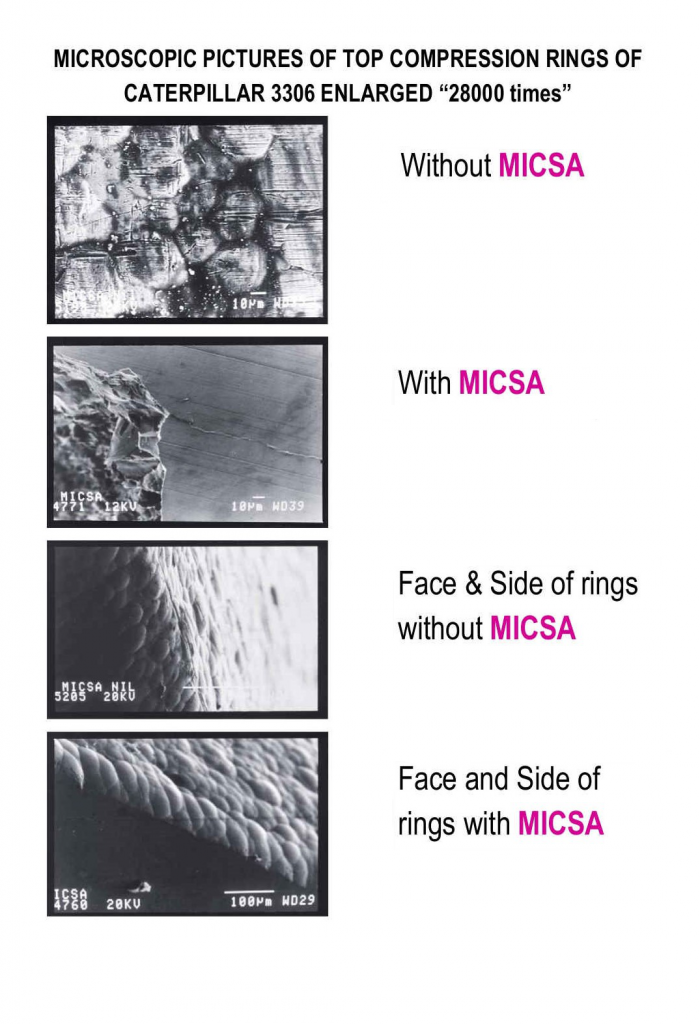
It works by modifying the metal surface to reduce friction (by filling the micro pores), corrosion and rust in engines and it is also applied directly onto metal surfaces such as in machine shop applications and on bearing surfaces before grease is packed.
Metal Conditioner
MICSA is not an additive in the normal sense of the word as it does not in any way change the characteristics of the primary oil or lubrication agent but rather, it is a high quality metal conditioner that attaches to and increases lubrication on any working part or machine thereby reducing resistance and ultimately wear and tear.
Process of Attachment
MICSAis compatible with all motor oils (other than vegetable oils), gear oils, hydraulic fluids and greases which it uses as a vehicle to get to the metal surface where it fills (into the micro pores) through a process called Polymerization and starts to bond at a certain temperature.
Reduces Friction
The effect of the MICSA treatment is a metal surface that has a much compacted coefficient of friction (Dynamic Wet 0.04) and a much reduced constant of elasticity which on a steel surface (8620 steel) tested with an atomic force microscope, the coefficient of elasticity was reduced by a factor of 16.8 times which provides a “stiffer” surface for friction reduction.


Scientific Formulas
MICSAis a concentrated liquid preparation consisting of a combination of Fluoropolymer particles, in particular various Monomers including the principal Photopolymer in suspension. In MICSA seven different grades of Monomers combined are used to give the maximum protection against wear and extremes of temperature plus friction free operation of the engine or mechanical part. Homopolymer is the substance with the lowest coefficient of friction of any material known to man today. It has a temperature operating range of -240°C to 290°C and will operate for short periods in the 450°C range long after other lubricants have deteriorated into hard films.
Metal Bonding
Bonding means that there is a chemical reaction (polymerization) between the MICSA and the metal by which MICSA becomes part of the metal itself, not just a coating on top of the metal. Scientific testing of treated metal surfaces (see report) shows that MICSA significantly increases the stiffness of the surface (not the hardness of the metal). In Engine treatments, MICSA does not remain in the oil when used at the recommended ratios, which is why MICSA should be added in addition to the normal amount of primary lubricant.

Safety of Product
In an engine, once the MICSA has treated all heated metal surfaces, any remaining MICSA will remain in the oil and serve no useful purpose. When applied to Lubricants (greases etc.) MICSA acts as an additional enhancement of the base product and with the lowest coefficient of friction, significantly contributes to added lubrication and reduced wear and tear. MICSASouth Africa’s ability to provide specialist technical and service back up to the Diesel, Heavy Equipment, Mechanical and Engineering Industries endorses it as the leading recommended and approved supplier within these markets.
Chemical Grade Blend
One of the most essential characteristics of MICSA is its base of various grades on Homopolymer monomers, which are produced from a powder moulded freely by compression. It is a Fluorocarbon polymer whereby the main fluorresin is Polytetra Fluor ethylene, a material with practically universal resistance of a Density 2-2,3 and has the following outstanding properties:
- Low Coefficient of Friction
- Excellent Mechanical Resistance
- Almost Chemically Inert
- Non Flammable
- Improve Boundary Films
- Unique Dry Lubrication Property
- Excellent Corrosion Resistance
- Excellent Insulator
- Thermal Stability -100°C to 270°C
- Protection Through Rust Inhibitors