
Mechanical Treatments
Engine/Diff/Transmissions
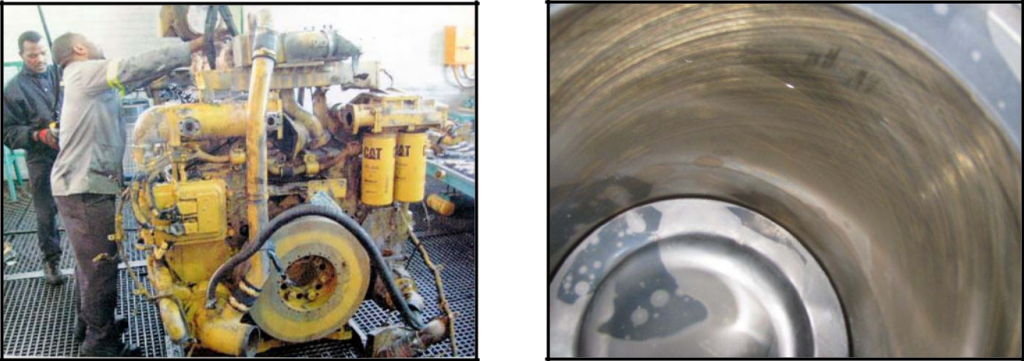
When MICSA is introduced into the engine via the oil filler it coats all wearing surfaces of the engine through a chemical process known as Polymerization. In this process the microscopic molecules of MICSA link together under the influence of heat to form a network Polymer which makes up a tough protective film. After this Polymerised layer is formed, heat no longer has any effect on it, and it is not dissolved by any solvents. This process only takes place at temperatures above 55°C. Because MICSA is chemically inert it does not mix with the oil; the oil only carries it until such time as the process of Polymerization is complete. The parent liquid of the preparation is a volatile detergent liquid, which has a cleaning action on the parts to be coated before it evaporates.
Treatment Period
Application of MICSA will vary depending on the amount of metal-to-metal contact/pressure. Since a layer of metal (which contains the bonded MICSA) has to be worn off, the amount of time this takes will vary. Because of the high wear resistance of MICSA, one treatment lasts for 80 000 kms or one year, or 2 000 hours under normal conditions or as recommended by oil sample analysis. The best way to tell when more MICSA is needed is to monitor the piece of equipment over time and determine when the effects of MICSA are no longer evident. Among the things that can be monitored is temperature, vibration, sound, energy consumption and wear. Some companies use a measure of metal wear particles (at each oil change) to determine when more MICSA is needed. When the metal particle count is back to where it was when MICSA was added, it is time for more MICSA.
Energy Savings
While a number of reports have shown fuel savings in vehicles, it is much easier to see energy savings for plant equipment using amp meters. A power plant found its 150-ton chillers drawing current (amps) in the upper 170s and lower 180s with MICSA rather than the upper 180s and lower 190s. This amounted to a 5.4% savings: not much as a percent, but the savings equalled the cost of the product on the 5th day, and the savings continued for a full year. Energy is wasted on internal mechanical friction but with MICSA that friction is almost entirely eliminated. The savings are greater when plant or equipment has a lot of metal rubbing against metal and load factors are high.
Product Dosage & Testing
MICSA is a concentrated formula that is used in relatively small amounts and lasts a very long time.For diesel engines, the application ratio is only 10% of the sump capacity, for gearboxes, hydraulic systems and many other applications, MICSA is used initially at 5% of base or sump value whilst in refrigeration it amounts to only 5% of oil capacity. After the first treatment, the dosage may be reduced slightly because these subsequent applications need only supply enough MICSA to treat the surface areas of metal where wear has occurred and the last treatment has worn off. It is extremely easy to test MICSA results by using temperature gauges, oil analyses, vibration testing, amp meters, service reports, dyna’s etc.
Engine/Gear Box/Diff Benefits
Some benefits of MICSA in Engines, Gear boxes, Differentials and Transmissions are:
- Improves fuel consumption
- Improves exhaust emission
- Increased engine performance
- Improves starting from cold
- Increased thermal efficiency
- Diminishes noise
- Minimises damage due to heat seizure
- Extra protection against fuel-oil dilution
- Reduced friction of metal against metal
- Prolongs engine life due to less wear
- Reduction of downtime
- Resistant to extremes of temperature